 maxforsey.com
Candidly and Kindly
06/01/2026
About a month ago, I left Runpod to start a new company called Daso. At Daso, we are building the first computer for kids for creating, learning, and exploring with AI. It's built around personalized growth and parent visibility, not feeds and engagement loops.
Although it's my second time as a founder, it's my first time as CEO, and I have been thinking a lot about the culture Daso should cultivate. Two books immediately came to mind: Radical Candor by Kim Scott and Crucial Conversations by Kerry Patterson, Joseph Grenny, Ron McMillan, and Al Switzler. The former focuses on the expected behavior of a great company and the latter focuses on how to have difficult conversations. There are also a few quotes that I want to point out along the way. Even though we are currently a pre-seed company that needs to find PMF and most of the culture in the early days comes from the work style of the founders, I want to write this blog post as a cheatsheet to look back on as we grow.
We're a team, not a family. - Reed Hastings
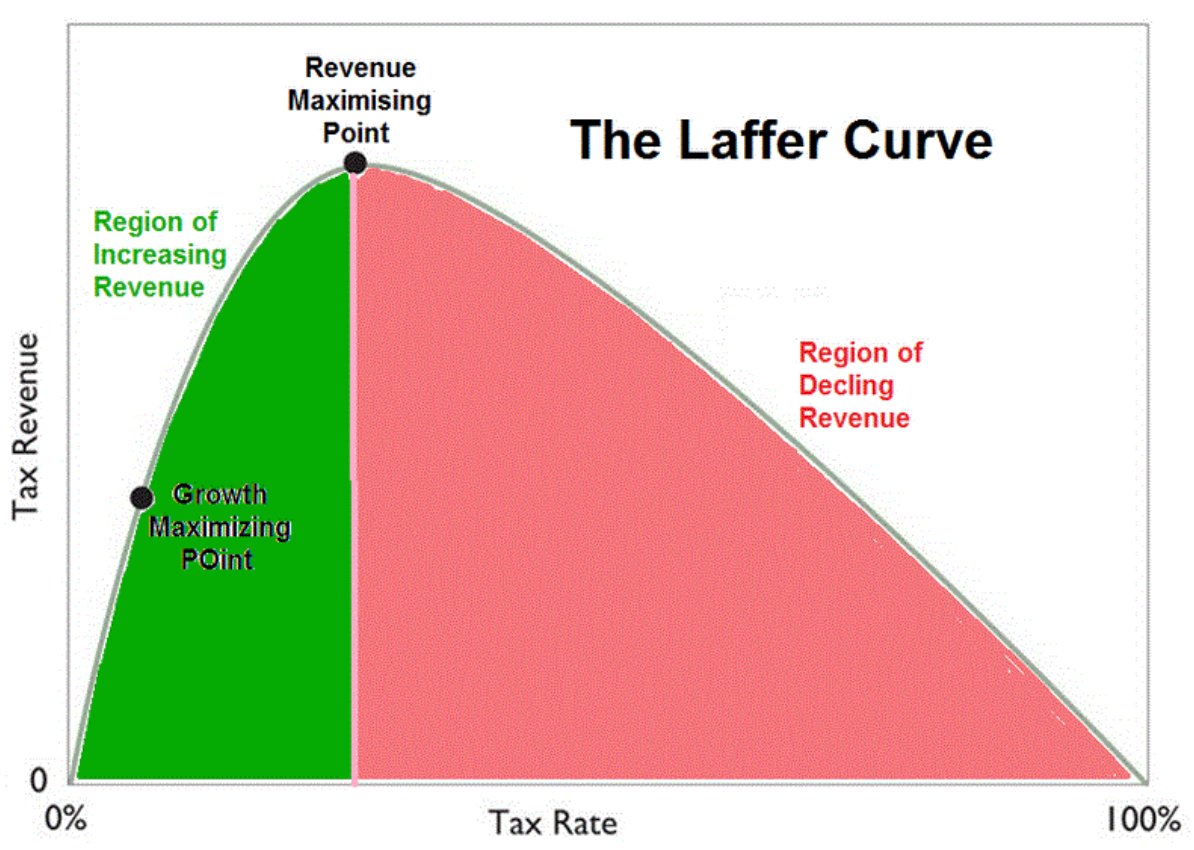
First and foremost, each person in the company has been hired to deliver a set of outcomes. I believe that each person has their own Laffer curve of productivity, and very few people actually generate a better return when encouraged to work 996. It is up to each person in the company to help one another grow to their point of maximum potential.
If you are unable to achieve those outcomes, we will work to find a set of outcomes that match your ability or help you find another company that matches your ability. It is unfair to you, your coworkers, and our customers to keep you in a position that you are unable to deliver on. This is not about your worth. This is about the match between the role and your current capabilities.
It's not mean. It's direct.
Years ago, when I was the CTO at Sameday, my first startup, I had a contractor named Allen who we had hired to build a web app for our customers. Allen was failing to hit a deadline and I was starting to consider firing him. Allen was around 40 years old and I was 23 at the time, and so for a few weeks, I stayed silent and sent him a few messages reminding him of the goal we were aiming for. I was worried that if I told him directly that he wasn't hitting his goals, he would be offended, and I was also worried that given how early I was in my career, I would look like a jerk. My co-founder at the time, Aaron, gave me the book Radical Candor and recommended that I read it to become a better manager. Unfortunately, I waited a few years to get around to reading it. If I had, I would have learned that there is a difference between being mean and being direct.
An easy way to think about radical candor is to think about the scenario when you're at a dinner and you see something in a person's teeth.
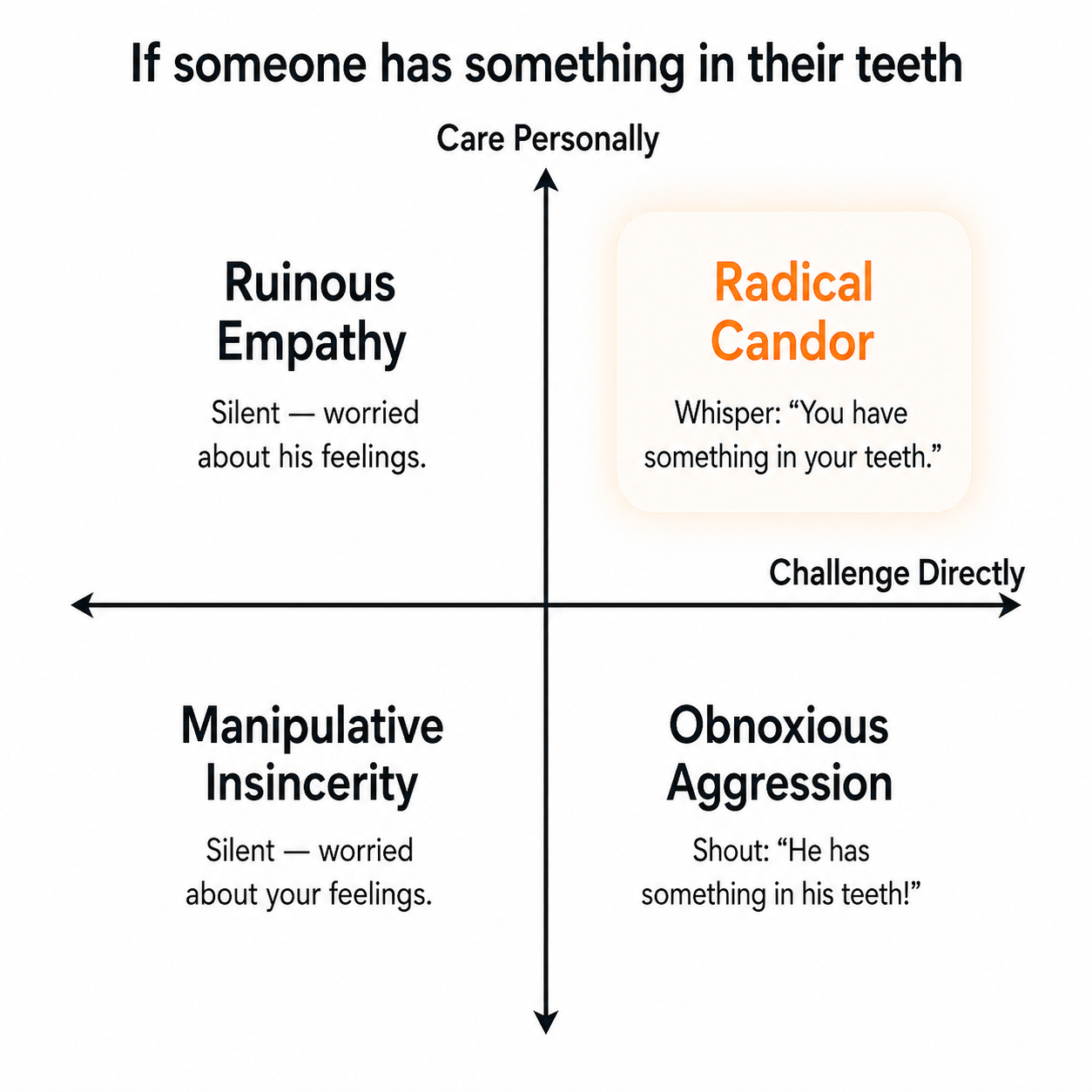
There are many times when, working together, we will metaphorically see something in each other's teeth, and it's up to each employee to identify how they can communicate candidly and kindly to give feedback to that person.
I never knew who I was talking to. I was always worried about the physics. - Richard Feynman
Early in his career, Richard Feynman worked at Los Alamos, where the U.S. military researched how to create the atomic bomb. During that time, Niels Bohr, the great Danish physicist, came to visit. When Bohr started to discuss the scientific aspects of the bomb, many people surrounded him and sought his time. Due to the fervor, Feynman got stuck in the back of the lecture hall and wasn't able to chat with Dr. Bohr.
Early the next day, Feynman received a call to meet with Bohr to discuss ideas about the bomb. For two hours, Bohr would suggest an idea and Feynman would tell him if it was dumb or not. Feynman was so confused why Dr. Bohr reached out to him specifically, and Dr. Bohr's son explained the conversation he had with his father.
Bohr said to his son, "Remember the name of that little fellow in the back over there? He's the only guy who's not afraid of me and will say when I've got a crazy idea. So the next time we want to discuss ideas, we're not going to be able to do it with these guys who say everything is 'yes, yes, Dr. Bohr.' Get that guy and we'll talk to him first."
Though Feynman would never use these words, it's clear that he was being radically candid because Feynman focused on the ideas discussed, not the person giving them.
How can I build a relationship with each of them quickly so that I can trust them and they can trust me? - Ryan Smith
It's clear that challenging an idea or a person directly is an important aspect of Daso's culture. The problem is that, as it stands, this approach can quickly lead to each person feeling they have permission to be a jerk.
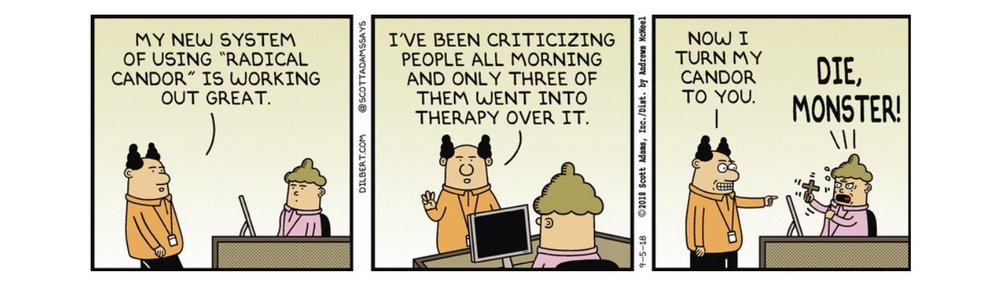
This particular failure mode is called obnoxious aggression: challenging hard while caring nothing for the person on the other end.
Remember the second axis of radical candor: caring personally. When you genuinely care about someone, you build the safety and trust that let them do their best work. If you haven't taken the time to get to know the people you work with, why would the feedback you give or ask for ever land well?
I won't claim it's possible to build deep trust quickly, but I do believe that you can build it a lot faster than most people do.
The trick is to skip the part where you stay nice, dodge the hard feedback, and wait for some moment when the relationship feels "ready" to handle it. That's exactly what I did with Allen when I stayed quiet. The waiting didn't protect the relationship; it just delayed everything.
Instead, challenge directly and care personally in parallel. Do the hard work to actually understand what a direct report cares about. Do the hard work to prepare excellent feedback that you give promptly after a direct report makes a mistake. Do the hard work to cultivate a relationship that feels safe enough that they'll tell you where you are failing.
This is faster than the default because most people treat trust as something you save up first and then spend on candor later. It's the opposite; being radically candid is how trust gets made. Every piece of honest feedback you deliver well, and every piece you ask for and act on, is a deposit.
A crucial part of understanding a person comes down to the incentives that drove them to Daso in the first place.
Show me the incentive and I'll show you the outcome - Charlie Munger
I believe there are mainly 2 categories of people you want in a company: rocket ships and rock stars. Rocket ships are optimizing for growth in their career, while rock stars are optimizing for stability in their career, as they maximize growth in another area of their life. Future founders, early career employees building their resume, or those aiming to become an executive are examples of rocket ships. They typically want more responsibility, more money, or more opportunities to learn and grow. A father who is raising a young child or a woman preparing for an important athletic event are examples of rock stars. They typically want to be given the ability to deliver in their current role and not extra opportunities to take on new roles. In a startup, it's clear that you want to optimize rocket ships as there is a ton to own and there should not be anyone in the company who doesn't have the startup as their main focus in their life until the company reaches PMF. At the same time, there are many exceptional people who fall into the rock star category, and they can usually bring needed experience to a team.
It is up to each manager to identify what the incentives of their direct reports are and to make sure that the company is prepared to align that person's incentives with the role that they're given and what they're great at. If you don't understand their incentives, they will burn out or become bored.
Crucial Conversations
A crucial conversation is when there are two opposing opinions on an important topic. Examples include telling a manager you can't hit a deadline, firing someone, giving feedback to a coworker, or telling a leader that their idea is dumb. There are so many crucial conversations that have to be had in a startup, and the faster you can have them, the faster you can solve problems.
Safety first
One of the fastest ways to fail at giving feedback is to not pay attention to safety. If both parties in the conversation are not feeling safe, no progress can be made. There are a few signs to tell if someone isn't feeling safe:
- becoming violent or defensive
- getting quiet
- pleasing, appeasing, or accommodating the person in an attempt to avoid a difficult subject
- attempting to leave (this is different from wanting to leave to handle your emotions)
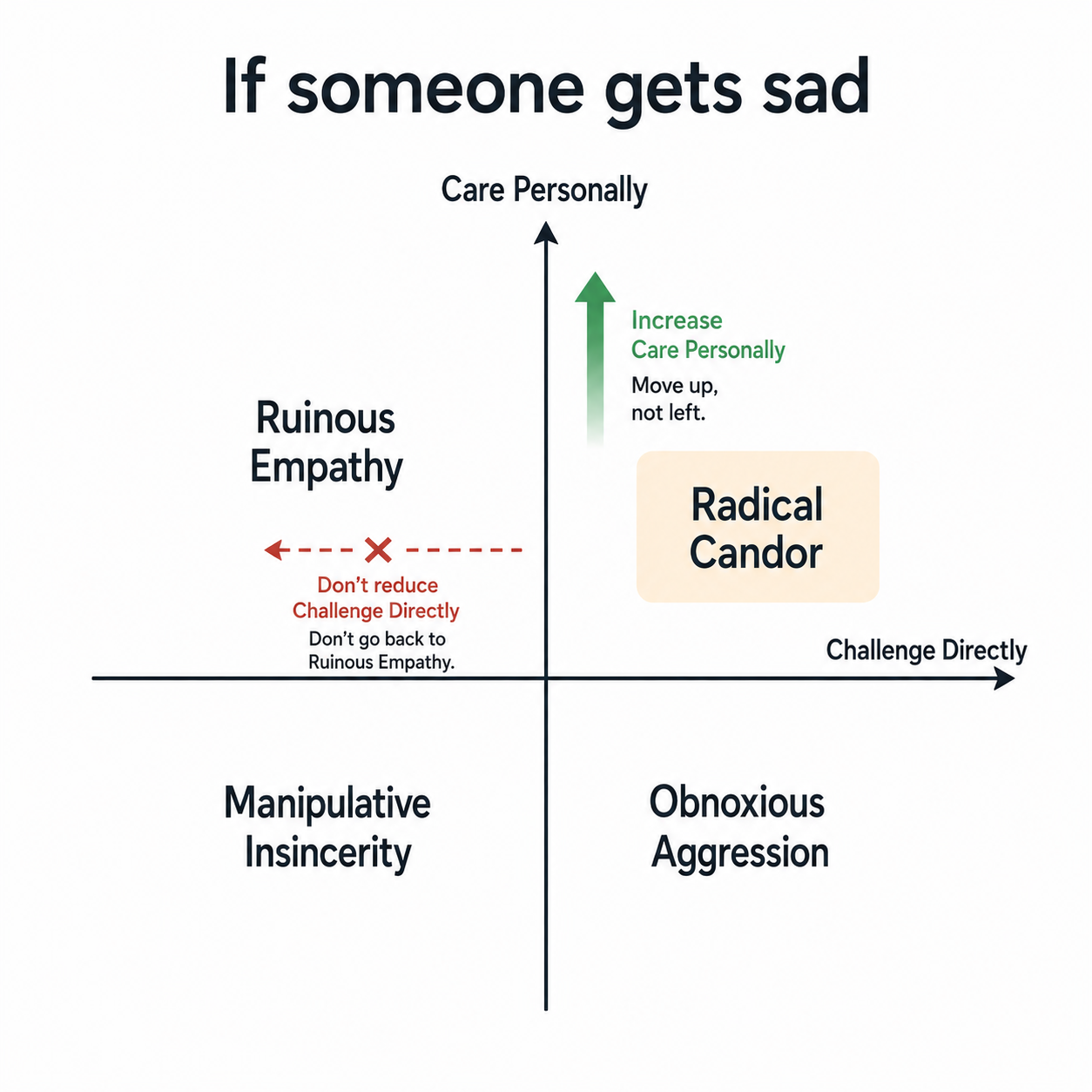
Once you have identified that someone doesn't feel safe, there is no reason to continue in the conversation until that safety is returned. That doesn't mean that you need to change the desired outcome but instead focus on reminding the person you care about them.
A phrase I find useful for this is to contrast what I don't intend with what I do. Something like, "My intention isn't to make you feel like a bad employee. My intention is to help you get this one specific thing right." This clears up the worst version of the story the other person might be telling themselves and brings the focus back to the actual problem.
How to actually have the conversation
Most of the work in a crucial conversation happens before it starts.
First, get clear on the outcome you actually want out of the conversation.
Second, master your own story. It's almost impossible to work with just the facts, because as humans we show up with a story we've built on top of them, and in that story we tend to be the hero or the victim and the other person the villain or an idiot. Ask yourself, "Would a reasonable, rational, and decent person do what they did? What story would make their behavior make sense? What facts am I still missing?"
A great way to ensure safety is to start out the conversation by establishing a mutual purpose, which is the outcome that you're looking for in this conversation. This helps the other person know what the topic is and what outcome you are aiming for. Then share the facts first and your story second. Be clear it is your story, not the truth. Then choose curiosity and seek to understand their story: do they disagree with the facts, or are they working from a different story? Ask, and listen to understand, not to reply.
Watch yourself the whole way through, not just them. Am I still feeling safe? Am I actually exploring their view, or just waiting for my turn? If safety drops on either side, stop and rebuild it before going further.
Finally, don't let it end as just talk. Decide how you'll decide. Commonly, one person whose domain centers on the topic will decide the outcome, or potentially there could be a vote or an attempt to reach consensus. Then you decide who does what by when, set a time to follow up, write the commitments down, and hold each other to them. A crucial conversation that doesn't end in a clear decision and a clear owner is worthless.
Another point worth mentioning is that not all feedback that needs to be given necessitates a full crucial conversation. Actually, in most cases, the faster you can give the feedback or present the correction in a way that shows you are paying attention and care about the other person, the easier you can keep the relationship clean. This could be over DM or a quick Google Meet. It's when a particular behavior or repeated behavior comes about that we need to enter a full conversation. Maintaining the culture of giving feedback frequently is essential to growth.
I specifically experienced this when I learned to speak Modern Greek in 7 months. I had a mentor named Ryan Goodwin who kindly corrected me immediately after we had a conversation with a Greek person and I had made mistakes. I knew that he cared about my growth, and I appreciated the high frequency as it didn't feel out of the ordinary or odd.
How to actually get feedback
It can be very risky to give feedback because you could potentially offend the other person and worsen the relationship. It is up to the person soliciting the feedback to ensure it is welcomed and encouraged. Similar to the Mom Test and getting feedback about a product, it's important to ask the right type of questions to avoid a yes/no answer.
Here are some example questions:
- What could I do or stop doing that would make it easier to work with me?
- In the last week, when would you have preferred that I be more or less involved in your work?
- What's something I've done in the last week that made it difficult to work with me?
- What's a blind spot of mine you have noticed?
- I'm really trying to do X better. I know in theory it's a problem, but I'm not always aware in the moment. Can you help me by pointing out when you see it?
- Tell me why I'm off base here.
It is important to try out multiple versions of these questions as some may land better than others given the person.
Conclusion
The point of getting good at giving and getting feedback is speed. The faster we can say the hard thing, the faster we can find the problem and fix it. A startup is a race to learn, and most of what we learn comes from being wrong, so I want us to make a lot of mistakes. A good mistake comes from an intentional bet: we thought it through, we were honest with each other about the risks, we moved, and it didn't work. We learn from it and move faster. A bad mistake is the careless one, the one we make twice, or the one someone saw coming and stayed quiet about in a meeting. Radical Candor and Crucial Conversations are how we trade bad mistakes for good ones. And the stakes are higher for us than for most companies: we're building a computer that protects a kid's attention instead of exploiting it. A company that can't be honest with itself has no business asking families to trust it with their kids. We only earn that by being the kind of company that tells itself the truth candidly and kindly.